Chore chart for a teenager — free printable PDF
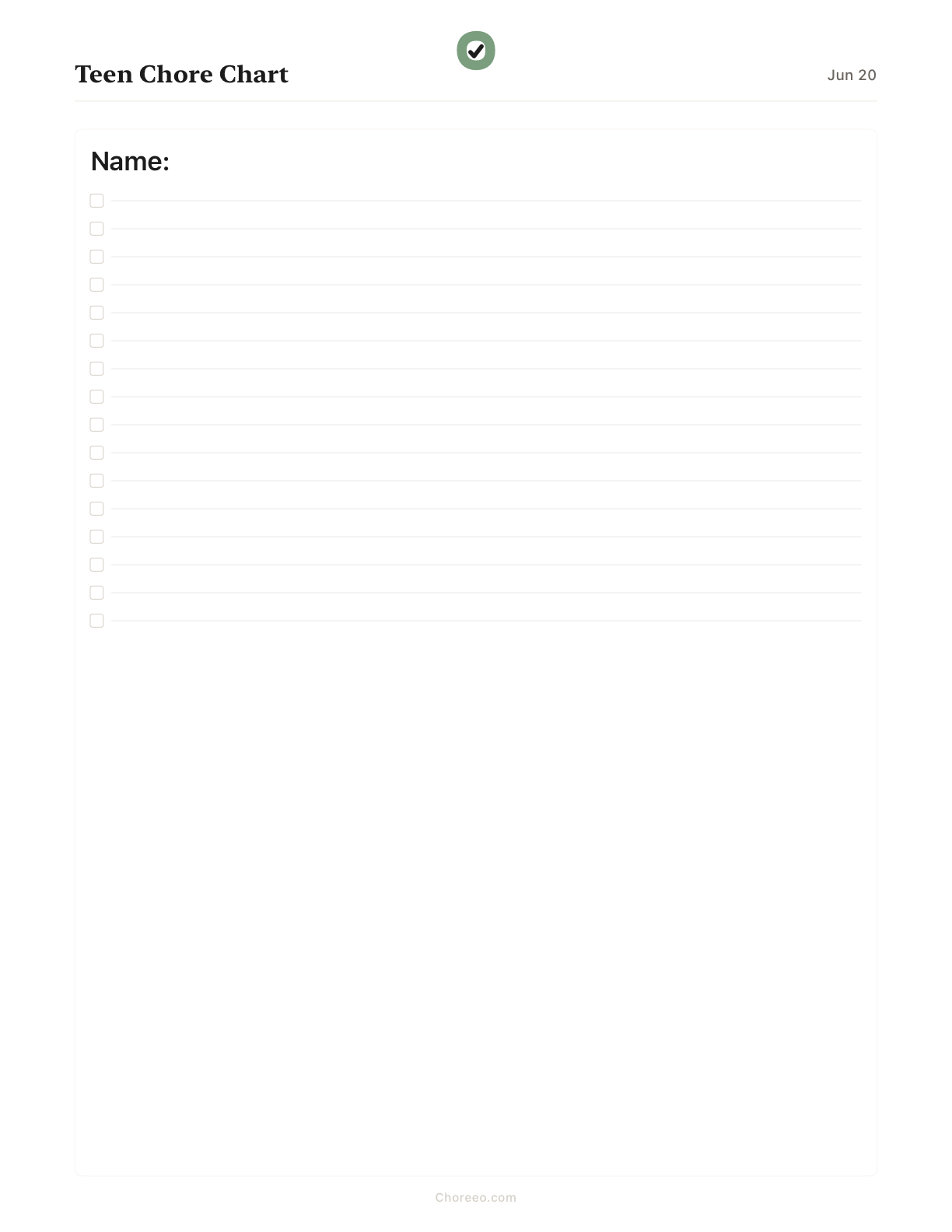
What to write on this chart
Age is a starting point, not a test. Choose one or two familiar jobs to try, show what finished looks like, and adjust for your child’s ability and the help available. Keep sharp, hot, heavy, chemical, and unfamiliar tasks with a grown-up; an age label alone does not make a task suitable.
- Agree on a share of laundry
- Help plan and prepare a familiar meal
- Reset a shared space after using it
These are ideas to write in yourself. See how to share and rotate jobs.
Keep the paper. Skip the rewriting.
The free template is yours to fill in and rotate by hand. Choreeo saves your family’s names and habits, works out shared turns, and lets a grown-up edit and reprint from the web.
Kids use the printout. Grown-ups use Choreeo.
Questions parents ask
What chores can a teenager try?
Agree on a share of laundry; Help plan and prepare a familiar meal; Reset a shared space after using it. Begin together and adapt to ability and supervision. These are ideas, not a required chore count or a promise about what every child can do.
Do I need to sign up to download the PDF?
No. Download this blank template without email, an account, or a payment. You can keep using the paper manually.
Can I fill this PDF in on my computer?
This is a print-and-write template, without digital form fields. To create a personalized chart before printing, use Make a chart. Choreeo keeps your family’s names, habits, and shared turns so you can edit and reprint them.
How do I print it?
Choose US Letter paper and print at actual size. Check the preview and page count before printing; larger family charts may use more than one sheet to keep the writing spaces readable.
Does the free chart rotate chores for me?
No. You choose suitable people and write the turns in by hand. Choreeo’s personalized chart can work out and retain shared Everyone turns alongside each kid’s own habits. Kids still use the printout.